Bevi's 2025 Environmental Impact Report

April 9, 2026

Key takeaways


Reducing plastic pollution for a healthier planet

Bevi was founded in 2013 after co-founder Eliza Becton decided to do something about the Great Pacific Garbage Patch, an accumulation of 1.8 trillion pieces of trash, mostly plastic, floating in the North Pacific Ocean.

She was inspired to find an alternative to all of the plastic waste making its way into the ocean every year. In 2013, she teamed up with Sean Grundy and Frank Lee to create Bevi. Together, the team was focused on fusing hardware, software, and design with a product that could solve a major part of the plastic pollution problem: single-use plastic bottles.

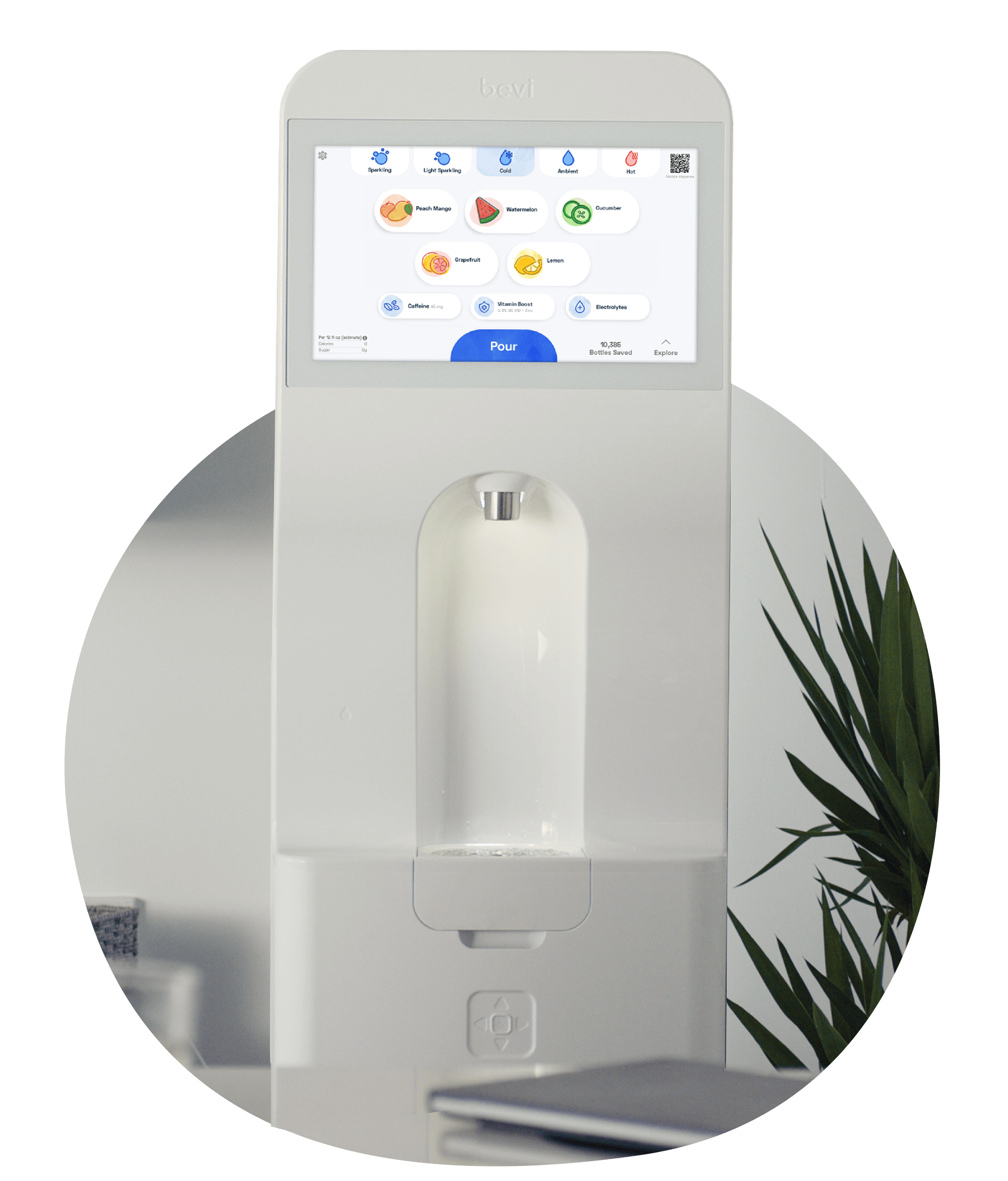
They invented the Smart Water Cooler® category of product as a result. These countertop and standup beverage dispensers pour still, sparkling, flavored, and enhanced water on-demand and use IoT-driven telemetry for tracking consumption and planning for maintenance.

Offsetting the need for one billion single-use bottles

As of December 2025, Bevi’s Smart Water Cooler® machines have officially eliminated the need for one billion single-use plastic bottles.

That is one billion fewer bottles manufactured, transported, and discarded. Filling a reusable bottle might feel like a small, inconspicuous act, but when multiplied by hundreds of thousands of people, it changes the world. When you choose to hydrate happy with Bevi, you are a part of a positive impact rather than a wasteful action.

Where Bevi can help your business reduce its plastic problem

For organizations committed to achieving net-zero targets, every facet of the corporate footprint requires scrutiny—including the high-volume waste generated by traditional beverage supply chains. 

Bevi’s Smart Water Cooler® is engineered to meet this challenge, transforming daily hydration from a logistical burden into a measurable driver of greenhouse gas reductions. 

Read more sustainability stories from Bevi

Every bottle counts: Beverage industry impact report


Last updated April 22, 2025.

A minute from now, another million plastic bottles of water will have been sold all over the world. Are you buying?

The vast majority of these plastic water bottles will be used only once. Most won’t be recycled. Instead, they’ll be incinerated or forgotten—piling up in landfills, clogging rivers, washing into oceans. And over time, they’ll break down into microplastics that are now showing up inside the human body. 

Despite mounting evidence of the environmental and health risks, plastic bottled water sales keep climbing. Why?

This report was written to show exactly how every bottle counts. It lays out how plastic bottles are made, where they end up, and what they’re doing to our environment and our bodies. It also shows what the alternative looks like when you eliminate the bottle entirely.

What’s below:


*when using the recommended 3M HF20-i carbon filter.

An industry built on waste

Since plastic bottles began replacing glass in the 1970s, the beverage industry has built its entire supply chain around cheap, lightweight plastic.

From manufacturing to transport to disposal, plastic bottles waste energy and create emissions. And once discarded, they become long-term pollutants, whether intact or as microplastics.

Impact report on bottled bevergae waste
Producing one plastic bottle for water generates roughly 83g of carbon dioxide emissions from factory to fridge (source). That means producing 600 billion plastic bottles for water every year creates roughly as much greenhouse gas emissions as 10 million cars (source).

The recycling excuse

Ask most beverage brands about their plastic environmental impact, and they’ll point to ambitious recycling goals.

These efforts sound promising. But recycling doesn’t scale nearly fast enough to keep up with this much plastic production. Plus, if companies are not reducing the amount of plastic they’re making in the first place, there’s no reason to think recycling will change anything for our planet or for our health.

These efforts are only worth it if there's follow through. Coca-Cola, for example, previously pledged to recycle 100% of the equivalent number of bottles and cans it put out into the market each year, then revised it down to 75% last December. They also pledged to make 25% of their bottles returnable or refillable by 2030, but that commitment was quietly removed from the company’s website years later.

Is recycling important, even necessary? Absolutely. A successful circular economy requires us to have the capacity to recycle. But recycling is often used as a distraction. An action that sounds like a solution but mostly provides good press and enough cover to keep single-use production going.

Recycling isn’t the answer. It’s stopping the production of single-use plastic bottles altogether.  

Leakage is inherent to the system. No matter how much we recycle, plastic waste continues to escape into the environment.

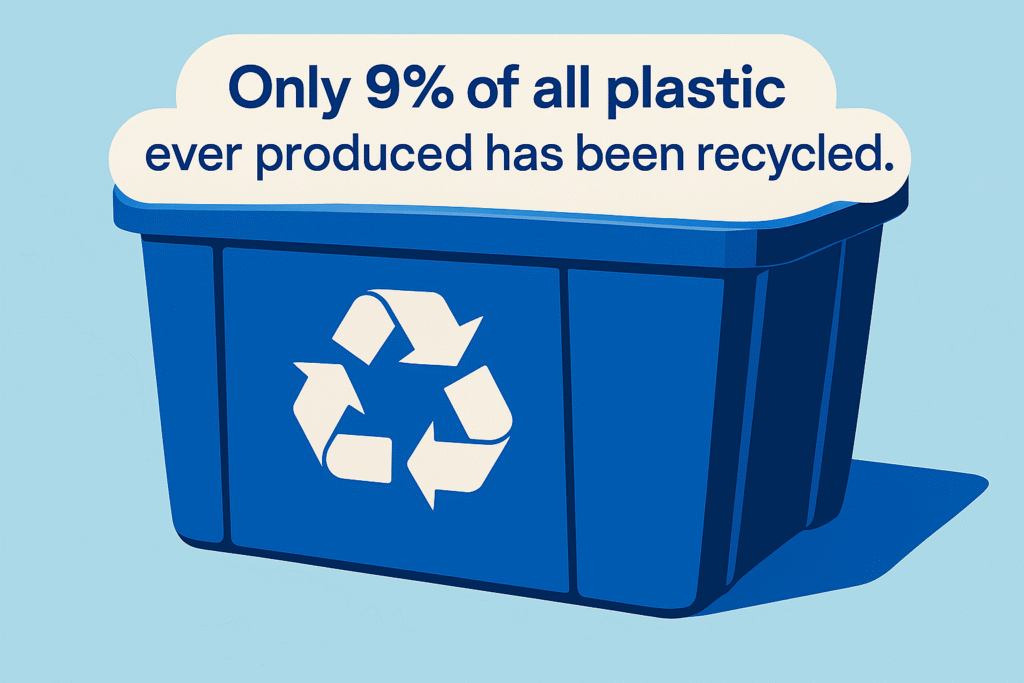
Only 9% of all plastic ever produced has been recycled.

What it takes to produce plastic bottles

Beyond the sheer volume of plastic waste added to the environment, plastic bottles are also remarkably resource-intensive to produce, transport, and refrigerate.

All of this effort and expenditure for water you likely already have access to on tap.

How big is the plastic pollution problem? 

Despite recycling initiatives, plastic bottles continue to flood the environment:

At least 267 species—from sea turtles to seabirds—are affected by plastic waste through entanglement, ingestion, suffocation, and more.

Recent research from the National Institute of Health found that 69% of all plastic containers and packaging we use, not just water bottles, ends up getting thrown in the trash (source).

The plastic we’re drinking

All of the plastic that is dumped into our ocean becomes part of the water we drink. But the problem truly starts with the bottle of water itself. The material of the plastic bottle itself degrades over time, especially when subjected to physical stresses like squeezing or exposure to heat, leading to the release of microplastics into the liquid. 

Microplastics can also be introduced during the manufacturing processes, including the handling of plastic materials in the bottling plants and the use of plastic components in the equipment. The duration of time that a beverage spends in its plastic packaging, both during processing and storage, can also influence the extent to which microplastics leach into the liquid.

It doesn’t have to be this way

All of this plastic waste, all of this energy and capital, comes down to one word: unnecessary.

Most places already have access to tap water. For places that don’t, getting clean water delivered at scale should be the goal, not bottling it up, branding it, and shipping it around the world.

If we’re lucky enough to have water at the tap, we should be focused on filtering it and making it enjoyable to drink—whether that means adding fizz, flavor, or functional enhancements.

You’re better off drinking filtered tap water than anything that comes in plastic. So is the planet. So are the ocean’s ecosystems. A generation from now, bottled water will seem as outdated as smoking on airplanes or not wearing seatbelts. Kids will come home and ask if we really used to buy this many bottles for water.

Bevi was founded so that we didn’t have to wait to make that future a reality.

Say goodbye to plastic bottles for water

Learn how a Bevi machine can fit right into your commercial space, whether it's an office, hotel, gym, warehouse, or dining hall.

Read the latest on Bevi's blog

Water cooler rentals for your next (sustainable) event

August 12, 2024. Events and conferences are a chance to connect. Meet new people, share novel ideas. But running these events also takes a lot of work—and generates a significant amount of waste, especially when you consider the single-use resources needed to keep attendees, organizers, and staff hydrated throughout a multi-day experience. 

To tackle this need for better hydration solutions, organizers are turning to water cooler rentals that are capable of delivering the same fun hydration experiences consumers have come to expect from bottled and canned beverages—such as interesting flavor combinations, functional ingredients, and sparkling options—without the single-use bottle or can. That means less waste and more memorable moments for attendees between talks, breakout sessions, and end-of-day socials.

Curious how it works in action? Here are three events made better with the help of a Smart Water Cooler machine.

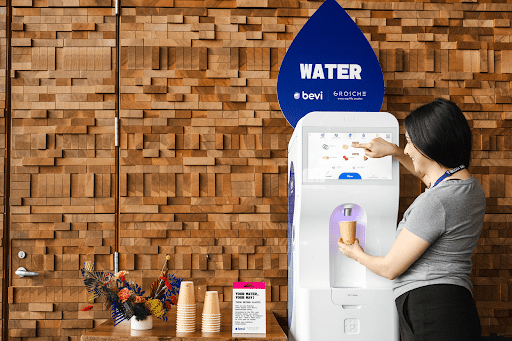
Bevi’s Standup 2.0 water cooler at a recent TED event. Photo credit: Felicia Chang / TED

TED2024: (No plastic) ideas worth spreading

At TED’s 40th anniversary, week-long conference, TED2024, the Bevi water dispenser delighted guests and staff while limiting the need for single-use bottles and cans, according to Rachelle Collete, senior manager of food and beverage at TED.

1. Why was the Bevi water cooler your rental choice for the event?

Rachelle Collete: Our conference program is jam-packed every day from the get-go until the evening. A personalizable water refill station is a really fun and engaging way for attendees to stay hydrated between sessions. We were excited to give our attendees the option to add caffeine or vitamins, select their level of carbonation, and mix and match new and fun flavor combinations. We're always looking for ways to transform the mundane into something delightful and memorable!

2. What was the overall sentiment or reaction to the water cooler at the event from attendees?

RC: Our community just loved the Bevi water stations. Attendees enjoyed creating their own unique flavor combinations and I overheard on more than one occasion attendees talking about their favorite blends amongst one another! Adding caffeine and vitamins to their water was a huge success and people sought the machines out throughout the week in an effort to find their own perfect formula.

3. How did the water cooler rental help your event achieve its environmental goals?

RC: Bevi was instrumental for sustainable onsite hydration. We encouraged attendees to refill their reusable water bottles to stay hydrated between talks. We saw a decrease in the amount of bottled and canned water consumed onsite.


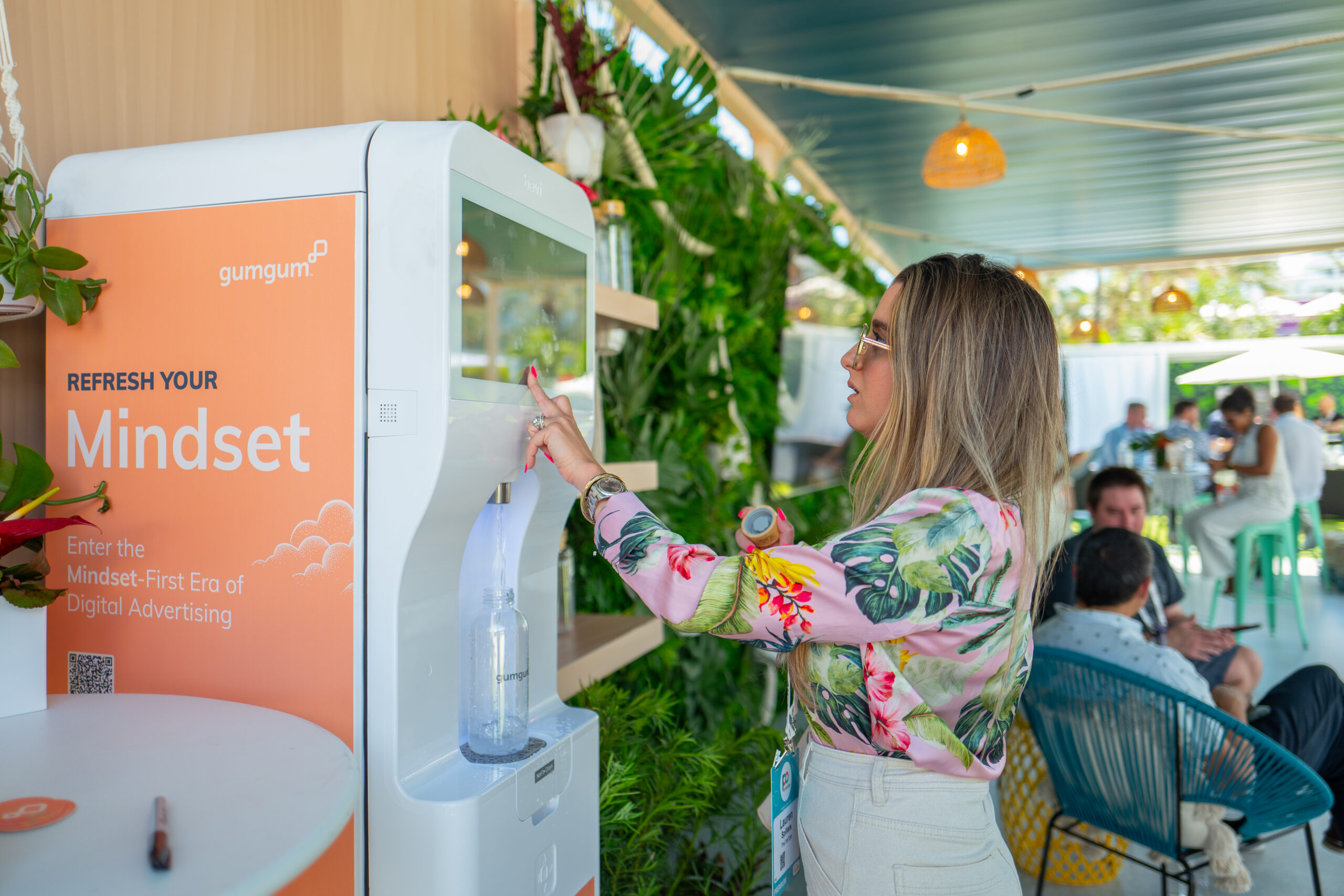
Bevi’s Standup 2.0 machine featured in the GumGum booth at the 2024 POSSIBLE conference.

GumGum: Good vibes and better tasting water

In the GumGum booth at the 2024 POSSIBLE conference in Miami, Florida, attendees were treated to a lounge- and mindset-themed setting that encouraged those to relax, recover, and connect. That included getting hydrated at the Bevi machine. According to Elaine Tripoulas of Sequence Events, the event planning agency who put on the GumGum booth at POSSIBLE, the Smart Water Cooler® machine saw great traction throughout the day.

Need to rent a water cooler for your event?

Delight your guests with premium water coolers that offer customizable flavors, carbonation, and temperature control. Perfect for corporate gatherings or any occasion.

1. Why was the Bevi water cooler your rental choice for the event?

Elaine Tripoulas: GumGum decided to sponsor Bevi stations throughout the event, and of course we had to include one in their booth as well. Event attendees LOVED filling up their GumGum reusable water bottles—playing with different flavors, the vitamin boost enhancement, and other features of the machine.

2. What was the overall sentiment or reaction to the water cooler at the event from attendees?

ET: It was a hot couple of days, but our Bevi machine kept the team and the attendees hydrated and in good spirits. The booth as a whole was a hot spot for attendees to congregate and chat, and the Bevi machine certainly contributed to the welcoming and relaxing environment. 

GumGum is a global technology and media company that uses AI-driven ad tech to improve digital experiences.

Hollywood Climate Summit: Practicing what you preach with water cooler rentals

The fifth annual Hollywood Climate Summit brought together industry leaders and environmental advocates to discuss climate action, with a focus on ethical dining and local flavors. They also decided to practice what they preached, using only compostable or reusable service wares, zero-packaging snacks, and locally-produced vegan options and ethically-sourced meats. This included Bevi as the water beverage provider.

1. Why was the Bevi water cooler your rental choice for the event?

The founder of the Hollywood Climate Summit was introduced to a Bevi machine at another event and knew immediately that it was something she wanted to showcase here for a wider audience to see. She knew that adding Bevi units to the event would support our ongoing goals of having less packages and more reusable items in our food and beverage program. And that people would have a lot of fun using it to stay hydrated.

Photo credit: Lex Ryan / VegOut

2. What was the overall sentiment or reaction to the water cooler rental at the event from attendees?

It worked out better than we could have ever imagined. From the literal moment these units were installed they were a complete hit. The setup team and Academy workers were all enthralled with the options—I was excited to see people excited to drink water. 

Once the doors opened and attendees started coming in, the Bevi machines were the absolute star of the show. We even have a photo of Bill Nye using one. It was really amazing to be able to offer something innovative, tech-forward, sustainable, accessible and just plain fun.

3. How did the machine help your event achieve its environmental goals?

By partnering your machines with reusable R-Cups we significantly reduced our need for any bottled water. (Recyclable or not, it's all resource heavy).  We went through 9 cases total of RAIN water for our backstage area—all other water on-site came from people using the Bevi machines! This also reduced the work of recycling, since we had zero plastic water bottles going into our recycling bins.


Keep learning about Bevi water cooler machines.

Are plastic water bottles safe to drink from?

October 17, 2024. Are plastic water bottles safe to drink from? The answer is a resounding, "Nope." And, given that awareness of how unsafe they are is growing daily, by 2040, most countries will have put a ban on single-use plastic bottles.

This may seem like an impossibly fast change. Plastic bottled beverages are currently everywhere. An estimated 1.3 billion are sold each day for water alone. Aren’t people too dependent? Do governments have the support to enforce it?

Plus, even if you know it’s wasteful, without water, soda, juice, or sports bottled drinks available at stores, gas stations, or vending machines, the world might not look quite right. But this future free from single-use plastic bottles will arrive sooner than you think.

Why? Five reasons.

Plastic bottles are already being banned.

1. Single-use plastic bottles are by and large completely unnecessary.

Curbing pollution is difficult for most major industries, such as transportation, energy, and agriculture, because we rely on them so heavily; we must find sustainable solutions while continuing business as usual. The beverage industry, though, is different. It's an industry of unnecessary excess, especially with plastic. The world’s largest beverage companies are the world’s leading plastic polluters—and their rate of pollution only continues to grow.

Out of the 14 million tons of plastic waste that get dumped into our oceans every year, 12% of it is plastic bottles. All this plastic pollution, over time, causes microplastics to enter our water supply, to become a part of the food we eat. These microplastics are a growing hazard to our health; they are being found everywhere—in our hair, lungs, arteries, blood, brains—and studies are starting to link them to serious health complications, such as heart attack, stroke, and even death. 

Plastic water bottles aren't safe for the planet and they aren't healthy for us to drink from.

Given that most places in the world have access to water from wells or taps, the focus should be on purifying this water for safe drinking and enhancing its taste and functionality, rather than bottling it in plastic containers that will eventually become yet another pollutant. We can, and should, move the beverage industry in a completely different direction without majorly disrupting our way of life.

Plastic bottles are bad for human health.

2. Plastic water bottles have too many microplastics in them.

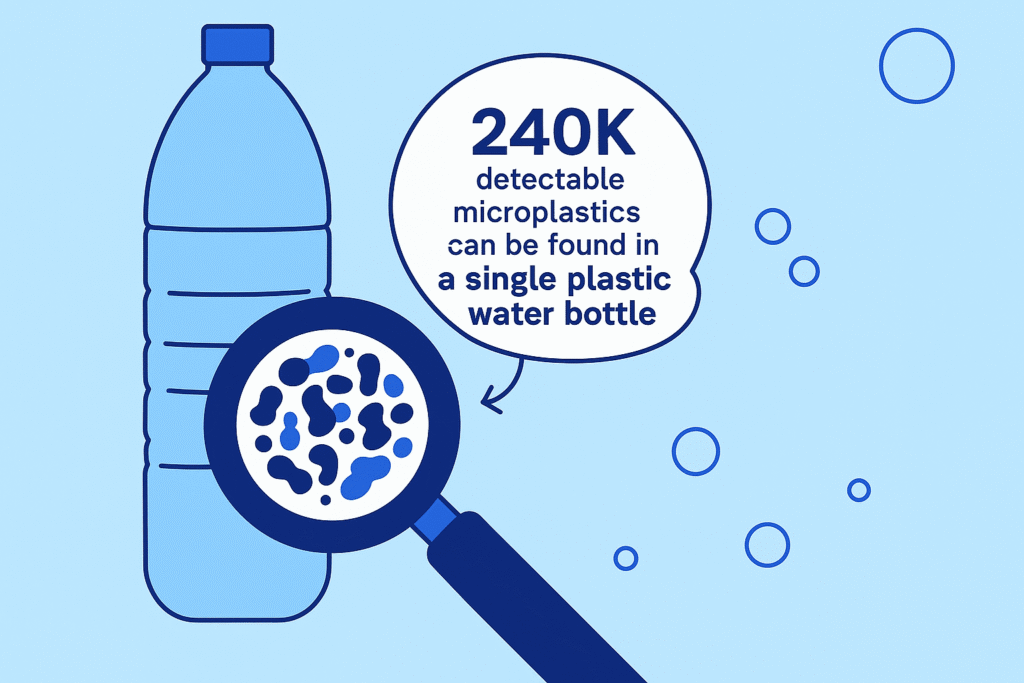
It’s not only that plastic bottle waste pollutes our environments, which in turn means it ends up polluting our drinking water. It’s also that the plastic bottles we are drinking from pollute the drinks themselves. A liter of bottled water contains 240,000 detectable plastic fragments, dramatically more than thought of just a few years ago. There’s also 252% more PET (polyethylene terephthalate) plastic in bottles used for soda than those used for water, raising concerns that microplastics in those sugary bottled beverages could be even worse than what we’re seeing in plastic water bottles. Studies have already shown that bottled soft drinks and teas have some level of microplastic contamination.

Consumers are already over single-use plastic bottles.

3. Consumers are already over it.

Three out of four people want to see a worldwide ban on single-use plastics. Either due to the negative impact these products are causing to the environment, the negative impact they're likely having on human health, or a combination of both factors, for most people, enough is enough. Time for less plastic packaging, no new plastic straws, and a complete ban on disposable plastic bottled beverages.

4. Policy action has already started.

Policy action has already started.

Pollution from beverage companies is so extreme that U.S. states and cities and environmental groups have taken to suing these companies for endangering environmental and public health and misleading consumers on the recyclability of plastic. Massachusetts became the first state to ban purchase of single-use plastic bottles by state agencies this past summer. And starting this past summer, some cities in California banned plastic and paper water containers from being sold.

Are plastic water bottles safe? Many state governments think not.

At the same time as bans are going into effect, reusable bottles are also becoming more of a hallmark of everyone’s daily carry, rendering single-use plastic bottles a needless extravagance. From New York City to San Diego, legislation is being put in place to allow for people to bring reusable bottles into stadiums, concert venues, and other businesses where single-use containers used to dominate. That trend will only continue.

Lastly, look no further than Europe for the sweeping policy change around single-use plastic bottles that’s already underway. The European Union, a trailblazer on many regulations that end up spreading throughout the world, such as food safety standards and data privacy, has already started imposing limits on single-use plastic packaging. And the Olympics this year in Paris took significant strides to cut down the use of single-use plastics.

5. Solutions already exist in market that can replace single-use plastic water bottles. Let's embrace them.

Perhaps most relevant, we aren’t waiting on any technological breakthroughs to offer high-quality beverages without single-use plastic bottles. Sustainable solutions (from Bevi and other companies!) are available right now, in many cases at a significant price discount to bottled beverages.


As far out as it may seem that most countries will ban single-use plastic bottles over the next fifteen years, it’s important to remember what we’re moving towards rather than what we’re leaving behind. Alternatives to single-use plastic bottles can be just as convenient and refreshing, as well as more fun and customizable, and not to mention actually sustainable, if we design them that way.

A future free from single-use plastic bottles is one where we’re not only healthier, but happier. Instead of having to worry about if a plastic water bottle is safe to drink from, you can just enjoy the beverage itself.

Keep reading our coverage of plastic bottles.

5 places you wouldn't expect to find a Bevi machine

October 20, 2024. You’ve probably seen a Bevi machine in offices, cafeterias, and warehouses—but did you know it’s popping up in some totally unexpected places? From nail salons to car washes, these bubbly Smart Water Cooler machines are replacing the need for single-use beverage in everyday spots where you'd normally (or maybe not normally!) buy a bottle of water. Here are 5 place you wouldn't expect to find a Bevi machine in the past, but you just might today.


1. Nail salons 

At nail salons like MiniLuxe in Boston’s Prudential Center, Bevi has become a hit. “Clients love it, and so does the team,” says one manager. When you're getting a manicure, your hands aren’t free for much—so sipping on a refreshing drink is one of the few things you can do. With Bevi, customers can hydrate while they wait, keeping them refreshed and energized during long appointments. Plus, it’s a great perk for salon staff, reducing the need to stock bottled drinks.

2. Car washes 

Waiting for your car to be cleaned can be boring, especially when you’re stuck in the waiting room on a hot day. But some car washes have installed Bevi machines, turning that wait into a more pleasant experience. Whether you’re sipping a flavored drink or getting a boost from electrolytes, having a Bevi on hand makes the time pass more quickly. By the time your car is spotless, you'll be refreshed and ready to tackle the rest of your day. Not so wild to expect to find a Bevi machine at a car wash, now is it?

Bring in the bubbles

These examples show how Bevi is bringing a little more refreshment and convenience into unexpected places, making everyday errands and activities a bit more enjoyable. Next time you’re at the nail salon or retail store, keep an eye out—you might just spot a Bevi machine.

3. Laundromat

Doing laundry may be one of those I’ve-got-to-get-it-done chores, but some laundromats are making their experiences something to look forward to by installing Bevi machines. While you wait for your clothes to wash and dry, you can grab a refreshing, customizable drink—whether it’s a sparkling water with a splash of flavor or a caffeine boost to help you power through the rest of your day. Bevi turns a routine trip to the laundromat into a little moment of refreshment, making laundry day feel a bit more like "me time."

4. Breweries 

At Aeronaut Brewery, Bevi is a crowd-pleaser. “The Bevi machine is a big hit with our guests,” says lead bartender Drew Fosdick. In a setting where drinking beer is the main event, Bevi helps guests stay hydrated, balancing out alcohol consumption with water. The one-to-one rule (one glass of water for every alcoholic drink) is easier to follow with Bevi around. Plus, it’s a game-changer for designated drivers and non-drinkers who can enjoy a fun, customizable drink while still being part of the brewery experience.

5. Car dealerships 

Buying a car can be stressful or waiting for your car to be serviced can drag on and on, but some dealerships are making it a bit more relaxing by offering Bevi drinks. Whether you’re grabbing a drink while browsing or sipping before sealing the deal, the Bevi dispenser provides a refreshing break from the intensity of big purchases. It’s a small touch that can make the whole experience feel more enjoyable.


Read the latest on Bevi's blog

4 countries leading the way in reducing plastic waste

September 19, 2024. We can learn a lot from countries taking bold action to reduce plastic production and make use (and re-use) of the plastic that we’ve already produced. These countries show that through new policies, green technologies, and better public awareness, reducing plastic waste can be efficient and rewarding.

Not all plastic management methods will work everywhere, but understanding what works for some will help us all tackle the global plastic problem faster. 

Plastic production currently uses 14% of the world’s oil, and according to the International Energy Agency, petrochemicals will drive half of the growth in oil demand by 2050. That means there's a lot of room for improvement! Plastics harm the environment at every stage, with 25% incinerated and 55% ending up in landfills or out in nature.

Swift, global action is needed to end this detriment to our health and the planet’s ecosystems, and these nations provide valuable examples of how we can start to make a real difference.

Refill, not landfill

Reusing plastic is good, but eliminating the need for it is even better. That's why we created the Bevi machine—sparkling and still drinks shouldn’t require new single-use bottles and cans every time you fill up.

Rwanda

"Use of non-biodegradable polythene bags is prohibited." You’ll see that sign when landing at the airport of Rwanda’s capital city—and your eyes aren’t deceiving you. Border agents will check if you’ve got a plastic bag with you. 

Rwanda emerged as a global leader in the fight against plastics in 2008 when it banned plastic bags. Since then, they have been on course to eliminate all single-use plastic. Along with other sustainability policies and civic engagement, the country has earned some unique distinctions. Kigali, Rwanda's capital, for example, is celebrated as the cleanest city on the African continent.

Banning Single-use Plastics. In 2003, an investigation led by the Rwandan Ministry of Health revealed that single-use plastic items were causing significant environmental problems. Plastics were blocking water channels, threatening biodiversity in water bodies, clogging drainage systems, and preventing water infiltration into the soil. Alarmed by the negative impact on agriculture and the broader environment, Rwanda started taking its decisive legal action. Eleven years later, the country expanded its to other popular single-use items, such as bottles, straws, plates, and forks. Rwanda led the way, 34 African countries have followed and implemented their own bans on plastic.

Community Participation. Rwanda's dedication to reducing plastic waste is clear through both government action and citizen involvement. The practice of Umuganda, meaning “coming together in common purpose,” is rooted in traditional Rwandan culture. Reintroduced in 1998 to aid the nation’s rebuilding after the genocide, Umuganda is now sanctioned and occurs on the last Saturday of each month. During this time, citizens aged 16 to 65 participate in community service, including plastic waste cleanup. They also engage in debates regarding what needs to be done in the community.


Germany

Germany boasts the highest recycling rate in Europe, recycling roughly 67% of its garbage waste on a municipal level. Thanks to mandatory waste sorting policies, an impressive deposit refund scheme, and high public awareness about recycling correctly, the nation provides a strong example of how to engage citizens in eco-friendly waste management.

Reducing Excessive Packaging. Do you ever look at all the layers of plastic and cardboard waste in your deliveries and lament? Germany’s Packaging Act (VerpackG), which went into effect in 2019, targets the reduction of excessive packaging. This legislation requires manufacturers to contribute to the cost of recycling their packaging, thus incentivizing the reduction of plastic use from the beginning.

Ambitious Bottle Deposit System: Germany's impressive recycling rate can be largely attributed to its ambitious and country-wide embrace of the deposit return system (DRS), known as the Pfandsystem. 

Established in 2003, this system incentivizes recycling by offering a small refund for returning bottles and cans to designated locations, making the recycling process both enjoyable and rewarding.

Imagine you’re a tourist in Germany, enjoying a refreshing beverage on a sunny day. When you purchase your drink at the store, you’ll pay a small deposit, ranging from €0.08 to €0.25. This price, called the ‘Pfand,’ is reflected on the bottle’s label. Once you’re finished, you can return the bottle to one of the many return locations at retail stores and supermarkets. There, a machine scans and processes your bottle, and you receive a receipt that allows you to get your money back at the checkout. Germany's effective public education about the system has led to an impressive 98.4% total return rate, reflecting enthusiastic participation from its citizens.

Did you know? In the U.S.A., bottle deposit schemes, or “bottle bills,” currently exist in ten states, including California, New York, and Vermont. We have yet to enjoy the same kind of citizen engagement as in Germany, however, as a result of lower public awareness and deposit values.


Sweden 

Sweden has emerged as a global leader in environmental sustainability, taking bold steps to reduce plastic waste and promote a circular economy.

Ambitious Waste-to-Energy Program: Sweden's advanced waste-to-energy (WTE) program is a cornerstone of its waste management strategy. The country pioneered WTE technology, which converts waste into energy, in the mid-twentieth century, with its first plant operating amid the post-war home-building boom in the late 1940s. The impact has been massive: thanks to this innovative approach, only 1% of the country’s trash ends up in landfills. 47% is recycled, and 52% is converted into energy, providing homes around the Nordic country with heat and electricity. 

More exciting developments are taking place in Sweden’s urban areas. The city of Stolkholm has built an underground waste collection system: thanks to this, waste chutes, placed in designated collection points throughout the city, take people’s trash and transport it to waste-to-energy incinerators. It’s real, but sounds like something out of a science fiction movie. How’s that for an urban development model for the future?

National Strategy for a Circular Economy: In July 2020, the Swedish government presented a national strategy to transition to a circular economy. Unlike a linear economy, where natural resources become waste at the end of their journey from production to disposal, a circular economy aims to create a closed-loop system where material goods and products continue to bring utility to citizens for as long as possible.

Key focus areas in Sweden's strategy include investing in sustainable product design, promoting the use of toxin-free materials, and educating consumers to support circular business models in their everyday lives. This comprehensive approach ensures that materials remain in use for as long as possible. Through these comprehensive efforts, Sweden demonstrates how effective policies and innovative programs can lead to significant environmental benefits, setting a benchmark for other countries to follow.


Costa Rica 

Costa Rica, in a bid to protect its natural biodiversity, became one of the world’s leaders in environmental protection by stating a desire to become carbon neutral as a country in 2007. While it will take them until 2050 to meet this goal, the country already runs entirely on renewable energy for more than 300 days of the year; no other country of its size has done this.  

Another key part of the country’s plan to meet net-zero? Reducing its plastic consumption.

Enhancing Recycling Efficacy: Aligning with the country’s broader goal of becoming carbon neutral by 2050, Costa Rica passed legislation banning the sale and distribution of single-use plastic shopping bags, straws, and cutlery. The government passed this law in 2019, along with measures aimed at reducing the impact of plastic bottles. Now, importers and manufacturers of plastic bottles must regulate the amount of recycled resin used and invest in less harmful waste disposal methods. The legislation encourages companies to partner with municipalities in improving waste management, fostering collaboration that is essential for achieving Costa Rica's ambitious environmental sustainability goals.

Researching Eco-Friendly Alternatives: In order to make the single-use plastic ban feasible for businesses, Costa Rica is leading the way in researching eco-friendly alternatives. One notable example involved students at the University of Costa Rica who developed a biodegradable material from bananas that proved to be five times stronger than plastic. This innovation highlights the potential of sustainable materials. Imagine all we could accomplish if other countries followed suit.

Japan

Japan has a long way to go in the race to tackle plastic pollution. The country ranks as the second-largest generator of plastic packaging waste per capita after the US. But recent policy shifts, combined with the country's unique conservation culture, signals a plastic reduction and recycling juggernaut soon to be.

Waste Not, Want Not: The expression Mottainai can be roughly translated into “waste not, want not,” deriving from the words mottai (importance of sanctity) and nai (lack). This centuries old-principle of Japanese philosophy permeates modern society, and transforms resource conservation into a part of the cultural ethos. Driven by Mottainai, Japanese people are more inclined to recycle and reuse items in their everyday lives, seeing value and potential in what other people may try to discard. That’s why over 80% of Japan separates garbage into 10 different categories for collection and recycling. And it’s likely a big part of the reason why the country has long seen a plastic recycling rate above 85%. 

Enhanced Waste Management: Japan has recently made significant strides to improve its waste management system through the implementation of the Act on Promotion of Resource Circulation for Plastics, which went into effect in April 2022. This legislation does many things, including:

In response, Japanese businesses are planning to increase plastic recycling and adopt biodegradable alternatives in the near-future. Companies like Kirin Holdings, a large beer conglomerate, has indicated it will use 50% recycled plastics in its products by 2027, just three short years from now.


A Way Forward?

While we often talk about the importance of recycling and many American companies tout ESG as a top priority, the United States consistently ranks as one of the highest plastic polluting countries. And we have little civic engagement to fix this problem: US households throw 76% of their recyclables into the trash instead of the recycling bin. (But maybe it’s because we already know our recycling system is broken.)

So, what can we do? To effectively reduce plastic pollution, we should embrace more ambitious policies. For instance, banning commonly used single-use plastics—including bottles, straws, and bags—can significantly protect both the environment and public health. Bold actions in plastic reduction are crucial for making a real impact, even if they seem like too big of a change at first.

For Those Tired of Single-Use Bottles and Cans

Trying to do your part eliminating plastic? Consider a Smart Water Cooler® for your business. Whether you run an office, gym, or hotel, a Bevi machine can replace single-use plastic bottles with still and sparkling beverages poured on-demand. rnrnPlus, a Bevi machine tracks how many bottles you’ve eliminated in real-time—and converts those bottles saved into emissions reduced from your environmental footprint.

Microplastics statistics: The harsh truth and what you need to know


Last updated March 13, 2025.

Microplastics—tiny plastic particles less than five millimeters in diameter—have become a pervasive pollutant in our global ecosystem. These particles infiltrate our oceans, rivers, air, and even the food we eat, posing serious risks to human health and the environment.

Standup 2.0: See the Sparkling and Flavored Water Dispenser

The Countertop: See the Bottleless Water Cooler and Bottle Filling Station 

Understanding microplastics

Microplastics fall into two main categories: primary and secondary microplastics, with an emerging third category—nanoplastics—raising even greater concerns.

Primary microplastics

These are tiny plastic particles intentionally manufactured for commercial use. They include:

We’ll dive deeper into microbeads and microfibers in the next section.

Secondary microplastics

These result from the breakdown of larger plastic debris, such as single-use bottles, bags, and discarded fishing nets. Exposure to sunlight, wind, waves, and other environmental forces causes these plastics to degrade into smaller fragments over time.

In marine environments, these fragments comprise an estimated 22% of microplastics identified by researchers.

Both primary and secondary microplastics now contaminate land and sea, fueling a planet-wide pollution crisis.

The rise of nanoplastics

As plastic continues to degrade, it forms nanoplastics, an even smaller subset of microplastics—typically less than 1 micrometer in size. These particles can:

With their ability to infiltrate ecosystems and living organisms in ways we are only beginning to understand, nanoplastics may represent the most insidious form of plastic pollution yet.

A closer look at microbeads and microfibers

These tiny pollutants are creating serious risks to public health and the environment.

Microbeads

About 50 years ago, cosmetics manufacturers began replacing natural exfoliants with microbeads—tiny plastic particles used in products like toothpaste, body scrubs, and face wash. While they provided effective exfoliation, their environmental impact was devastating. Because of their microscopic size, microbeads easily slipped through wastewater treatment systems, polluting waterways where fish and marine life often mistook them for food.

Recognizing the danger, the Microbead-Free Waters Act of 2015, signed by President Obama, initiated a ban on microbeads in personal care products, with full enforcement by July 2018. However, microbeads still persist in some regions, and consumers can identify them in products by checking for ingredients like polyethylene, polypropylene, polyethylene terephthalate, polymethyl methacrylate, polylactic acid, or nylon on labels.

Microfibers

Unlike microbeads, microfibers are not intentionally manufactured—they are microscopic fibers shed from synthetic textiles like polyester and nylon, especially during washing.

With synthetic fibers now making up 64% of the global textile market, microfiber contamination is an escalating crisis. Microfibers also originate from clothing, home textiles, personal care products, fishing nets, rope, and cigarette filters. Over time, this has led to staggering levels of pollution.

Here are some troubling microplastics statistics that highlight the dangers of microfibers:

Despite growing awareness, efforts to reduce microfiber pollution remain sluggish. A recent California bill proposed that all new residential washing machines be required to include microfiber filters by 2029, but Governor Gavin Newsom vetoed it, citing consumer cost concerns. This setback underscores the urgent need for stronger waste management policies, global regulations, and sustainable textile innovations to curb microfiber contamination before it worsens.

Why are microplastics everywhere?

As microplastics shed from everyday products, they continue to accumulate in the air, water, and soil, increasing risks to wildlife, ecosystems, and human health. Scientists have detected microplastics in every marine habitat ever studied, highlighting their widespread presence and persistent nature.

Here are the primary sources of microplastics:

Plastic water bottles

Synthetic textiles

Tires

Paint

Plastic pellets (nurdles)

Plastic bags and agricultural mulch films

Also, plastics are often infused with chemical additives such as pigments, fillers, plasticizers, antimicrobials, heat and UV stabilizers, and flame retardants. These can also enhance plastic’s flexibility, durability, and resistance to environmental factors, contributing to the enduring and pervasive challenges of plastic pollution.

How microplastics enter the food supply

In addition to prevalence in our air and drinking water, microplastics statistics reveal the presence of these particles in many of the foods we eat.

1. Seafood

Microplastics have infiltrated marine food chains, affecting everything from tiny plankton and larvae to large fish. When plastic debris breaks down and is ingested by small marine organisms, it ultimately reaches the dinner table.

Since the U.S. imports 90% of its seafood, often from regions with significant waste leakage, consumers are at increased risk of exposure.

Because fish farmed in fisheries and aquaculture environments typically have shorter lifespans, and live in more controlled conditions, it’s possible they have a lower risk of microplastic exposure. However, researchers are still investigating whether farmed seafood contains lower amounts of microplastic contamination than wild-caught fish.

2. Meat and dairy

Beyond seafood, microplastics also infiltrate our diet through land-based food sources. A 2022 study found microplastics in 75% of meat and milk products tested.

When plastic waste breaks down in soil and water sources, it mixes with animal feed crops, which livestock then consume. Additionally, grazing on polluted pastures and drinking contaminated water also introduce microplastics into their bodies. Over time, these particles accumulate, eventually ending up in the meat and dairy products that humans consume.

3. Fruits and vegetables

Studies have found significant microplastic contamination in apples, tomatoes, and carrots. Microplastics infiltrate plant-based foods primarily through contaminated soil and water, as the plants absorb microplastics through their roots.

Where microplastics are found in the human body

Microplastics statistics reveal these particles are present in nearly every part of the human body.

Key findings include:

This evidence indicates that humans are ingesting microplastics throughout their lives and even before birth, posing a significant threat to global health.

How microplastics impact human health

Adults consume up to 121,000 microplastic particles per year from air, food, and drinks. While humans can eliminate over 90% of ingested microplastics, once ingested or inhaled they can cause inflammation, disrupt hormones, and introduce toxic chemicals and pathogens into the body.

Key health impacts include:

Although the full extent of their impact is still being studied, the presence of microplastics in the human body underscores the urgent need for further research and effective measures to reduce plastic pollution.

The environmental impact of microplastics

While researchers are working to fully understand the impact of microplastics on the environment, here are some key statistics and information that underscore the importance of mitigating plastic pollution.

5 latest microplastics statistics

Recent news has revealed the following microplastics statistics.

1. Bottled water contains as much as twice as many microplastic particles as tap water (source)

As we’ve mentioned, researchers found microplastic contamination in 93% of water bottles. This was from a study which sampled more than 250 bottled water products sold in nine countries.

The bottled water industry isn’t stringently regulated—at least not as much as our municipal tap systems. This means that even water marketed as “pure” can still be full of contaminants. However, tap water still has significant levels of microplastics, so filtering tap water, such as with a Bevi office water cooler and dispenser, is a safer alternative.

2. Microplastics hinder photosynthesis, threatening 400 million people with starvation (source)

Microplastics are cutting food supplies by disrupting photosynthesis, reducing staple crop yields by up to 14% and marine algae growth by 7%.

Asia is hardest hit, losing up to 177 million tons of wheat, rice, and maize yearly. The U.S. and Europe are also seeing declines.

In the oceans, microplastics are shrinking fish and seafood stocks by up to 24 million metric tons annually—enough protein to feed tens of millions. Without intervention, microplastics could worsen global food insecurity in the coming decades.

3. Ditching bottled water can decrease microplastic intake by 90% (source)

Switching to filtered tap water can dramatically reduce your exposure, cutting annual microplastic consumption from 90,000 to 4,000 particles. A simple change with a big impact.

4. The Great Lakes have the among the highest reported levels of microplastics worldwide (source)

Microplastics have been discovered in sources of drinking water and in fish collected from the Great Lakes and their watersheds.

In the fish, levels are among the highest reported worldwide, suggesting human exposure to microplastics through Great Lakes resources and making swimming in them hazardous.

5. Alarming levels of microplastics in the brain could be increasing dementia risk (source)

Studies reveal that microplastics accumulate in the human brain, with dementia patients showing up to five times higher levels. Brain tissues also hold seven to 30 times more microplastics than other organs, mirroring the surge in environmental pollution.

Particles under 200 nanometers, primarily polyethylene, can penetrate cerebrovascular walls and immune cells, potentially crossing the blood-brain barrier. As research continues, the link between microplastics and cognitive decline raises serious health concerns.

What’s being done to combat microplastics?

Governments and organizations worldwide are taking action:

How to reduce your microplastics exposure

The easiest way to reduce your microplastic exposure is to avoid buying bottled water when possible. Not only are there approximately twice as many microplastic particles in bottled water than tap water, but also the vast majority of plastic bottles end up as waste in a landfill or as marine plastic.

Consider switching to a reusable bottle that you can fill up numerous times throughout the day. Bevi water machines can help your office, workplace, or retail space make the switch by offering filtered, flavored, and unflavored water at the tap of a button.

Other ways to reduce your intake of microplastics include:

Microplastics Statistics - FAQs

Here are answers to frequently asked questions about microplastics.

What percent of people have microplastics in their body?

Recently, scientists discovered microplastics in human blood: About 77% of the people who were tested were found to have microplastics in their bloodstream.

How much microplastic do we ingest?

We ingest enough microplastics to make a credit card each week, although this may vary by region and diet.

Are microplastics a threat to children?

One study found that there were more microplastics in the feces of babies than adults. The tiniest pieces can cross cell membranes and enter the circulation. In cells and laboratory animals, microplastic exposure can cause cell death, inflammation and metabolic disorders.

How many people have died from microplastics?

While research into the health effects of microplastics is too new to determine the number of deaths that can be attributed to this form of plastic waste, research shows 400,000 to 1 million people die annually from plastic pollution. This includes chemical exposure to waterborne diseases and fumes from burning plastic.

Are microplastics in tap water?

Microplastics have been found in 83% of tap water worldwide. In the U.S., 94.4% of tap water samples revealed the presence of plastic fibers, the highest rate in the world. U.S. samples had an average of 4.8 microfibers per 500 ml.

Here is the percentage of tap water samples containing plastic fibers in other countries and regions:

An effective water filter can help reduce exposure to microplastics in tap water.

Are most water filtration systems effective at removing microplastics?

Current water filtration systems vary in their effectiveness at removing microplastics. While some advanced filtration technologies can significantly reduce the presence of these tiny particles, others may not be as efficient. 

Advanced technologies like reverse osmosis (RO) and ceramic filters are among the most effective. RO systems can filter out particles as small as 0.0001 microns​. Ceramic filters, with pore sizes around 0.2 microns, also perform well in capturing microplastics, bacteria, and other contaminants​. However, less advanced methods may only filter out the largest microplastics.

At Bevi, we believe you should trust that your water is good for you—so we put the work into figuring out a state-of-the-art filtration system. It is equipped to use a 3M carbon filter that is certified to remove 99.99% of microplastics from tap water, along with 99.9% of bacteria, chlorine, cysts, and other sediment.

How much plastic waste do Bevi machines save?

Bevi customers have saved over 500 million bottles to-date. When you use a Bevi machine, you’re saving more than a plastic bottle—you’re shutting off the oil needed to create it and keeping the air free from emissions that come from shipping it.

On average, a Bevi bottleless water cooler and bottle filling station saves thousands and thousands of bottles and cans annually. A real-time counter on your machine shows the single-use plastic bottles, cans, and CO2 emissions your team is helping to eliminate. Learn more about our mission to reduce plastic waste here.

How can Bevi machines be integrated into different business environments?

No matter your business environment, Bevi delivers. Whether you need a business water dispenser and cooler, water cooler for retail stores, hotel water dispenser, gym water dispenser, airport water dispenser, cafeteria water cooler, warehouse water cooler and dispenser, hospital water dispenser, car dealership water dispenser, or a water cooler rental for a special event, Bevi’s sleek designs fit seamlessly into any space. From compact countertop models to premium freestanding units, there’s a hydration solution for every business layout.

The bottom line: Reducing microplastics starts with us

Microplastics have infiltrated every corner of our environment—from the water we drink to the food we eat and even the air we breathe. Their presence in the human body raises alarming health concerns, while their impact on ecosystems threatens biodiversity and food security.

While governments and industries must play a role in addressing plastic pollution, individual choices matter too. Simple steps like switching to filtered tap water, reducing single-use plastics, and supporting sustainable brands can significantly cut microplastic exposure and waste.

How Bevi fights against microplastics

At Bevi, we’re on a mission to reduce plastic waste and microplastic exposure by delivering clean, great-tasting water—without the need for single-use bottles or cans. Every refill from our smart, sustainable office water coolers helps create a healthier planet and a future with less plastic pollution.

Our advanced filtration technology ensures the purest drinking water for offices, businesses, gyms, hotels, conventions, and other commercial spaces.

With industry-leading filtration, Bevi:

Join us in making a difference. Small changes—like refilling instead of replacing—can lead to a cleaner, safer tomorrow.

>> Learn more about Bevi’s mission.


Read more on Bevi's blog.

The problem with disposable plastic bottles

April 17, 2024. After learning about the Great Pacific Garbage Patch, an immense collection of 1.8 trillion pieces of mostly plastic waste adrift in the North Pacific Ocean, Eliza Becton, a mechanical engineer turned industrial designer from Yale and RISD, was shocked. It was tragic to see us polluting our oceans—which ultimately meant polluting our drinking water—with disposable plastic bottles and containers, many of which had once contained that very same drinking water. What actions could we take to address this terrible, wasteful cycle? Eliza would eventually meet, and start working with two graduate business students in environmental advocacy, Sean Grundy and Frank Lee from MIT Sloan, who shared her concern for the plastic pollution issue. Together, they resolved to launch their efforts within the beverage industry.

King of plastic waste

Fact: the world’s largest beverage companies are also the world’s biggest plastic polluters. They have been polluting plastic at an increasingly monstrous rate for decades. Their pollution is so extreme that U.S. states and environmental groups have taken to suing beverage companies for endangering environmental and public health and misleading consumers on the recyclability of plastic.

600 billion plastic bottles and containers are produced each year for water alone. Less than 30% will ever be recycled. The remaining waste will end up in landfills, streets, fields, and waterways. Those waterways run to the ocean, where plastic bottles—and the microplastics they degrade down into—join other waste to become another 14 million tons of plastic added annually to our largest bodies of water.


Be part of the solution.

Replace bottles with Bevi to cut plastic waste and offer healthy drinks in your commercial space. Download Bevi’s Environmental Sustainability Report to learn more.

Get the Report


What does it take to get rid of disposable plastic bottles

Consider: every 16 oz. plastic bottle of water is manufactured using 179 oz. of water and enough oil to fill a quarter of that bottle. Getting one bottle from factory to fridge generates 78.9g of carbon emissions, which multiplied by the number of plastic bottles sold annually across the globe, equals the carbon footprint of 12.5 million cars. That means a staggering amount of energy—and water—is wasted every year producing hundreds of billions of plastic water bottles.

Also consider: bottled beverages may not be all that safe to drink. A liter of bottled water has 240,000 detectable plastic fragments in it. Every bottle. These microplastics are a growing hazard to our health; they are being found everywhere—in our hair, lungs, arteries, blood, brains—and have the potential to cause serious health complications. And there’s 252% more PET (polyethylene terephthalate) plastic in the bottles used for soda than those used for water, which raises questions about its microplastic content.

Disposable bottles are part of the bigger plastic problem

All of the plastic that is dumped into our ocean at first required energy to manufacture it and a supply chain to distribute it. All of that plastic, in the end, floating in the ocean, eventually becomes part of the water we drink. It enters the food chain, so it becomes a part of the food we eat. Plastic is doing damage to our planet—and, in the end, it’s doing damage to our health. No wonder three out of every four people support a worldwide ban on single-use plastics.

Unbottling the beverage industry

Eliza, Sean, and Frank started Bevi over 10 years ago because they believed people shouldn’t have to choose between sustainability and convenience. You shouldn’t have to choose what’s good for you and what’s good for the environment. Bevi is designing a world where you can do both.

Bevi offers a wide variety of healthy beverages without disposable plastic bottles, in a format that is just as convenient—and more fun—than bottled alternatives. Our bottleless machines pour still, sparkling, hot, cold, flavored, and enhanced water on-demand.

  1. Our customers have already collectively saved over 750 million bottles and cans. We plan to save 1 billion single-use containers by the end of 2025.
  2. Each machine we produce can save thousands and thousands 12 oz. single-use containers every year.
  3. Bevi cuts the wasteful traditional beverage supply chain by more than half, eliminating fuel-intensive transportation with every beverage poured from our machines.
  4. Our machines are built with state-of-the-art carbon filters, designed to remove microplastics, bacteria, chlorine, and other unwanted elements from tap water down to 0.2 microns—surpassing the precision of even premium consumer filters.
  5. More than 6,000 companies and organizations keep their employees, residents, guests, partners, and attendees hydrated and happy with Bevi machines.

Bevi will soon replace single-use bottles and cans in all the places they’re frequently consumed. There will be a smart water cooler to greet you as you go about your day: in the office, at the gym, at school, and even in restaurants and bars. It will be far more cost-effective than buying single-use containers, with all of the same flavors, fizz, and fun, and without the egregious plastic waste in our oceans.


Read the latest stories on Bevi's blog.

When It Comes To Drinking Water, What Does “Sustainability” Really Mean?

November 2, 2023. We are drinking so much water.

In 2022, the average American consumed 46.5 gallons of bottled water, compared to 36 gallons of soda. This is the most ever, surpassing carbonated soft drinks for the seventh year in a row. 

But it comes at a major cost—most water is consumed from single-use plastic bottles. The production and disposal of these containers has a big impact on greenhouse gas emissions, the leading cause of climate change.

Millions of plastic containers are thrown away every day all over the world. But there are steps you can take to drink—and live—more sustainably. First, here are three main ways single-use water bottles contribute to climate change.

Interested in learning more about our machine?

Bevi Smart Water Coolers provide still, sparkling, flavored, and enhanced water without needing disposable plastic bottles. Want to learn more about why it's a great fit for your commercial space?

How Single-Use Water Bottles Contribute to Climate Change

Extraction of Fossil Fuels

Single-use water bottles are made from plastic, which is a petroleum product. The extraction and processing of petroleum releases greenhouse gasses into the atmosphere, which contribute to climate change.

Production of Plastic

The production of plastic also releases greenhouse gasses into the air. In fact, it’s responsible for about 4% of global gas emissions. The water bottling process releases 2.5 million tons of carbon dioxide into the atmosphere every year.

Disposal of Plastic

As you’ve noticed, single-use water bottles are often not recycled. Every year, 38 billion disposable containers (86%) end up in landfills in the US, according to the Container Recycling Institute.

When plastic breaks down in landfills, it releases methane, a greenhouse gas that is 25 times more potent than carbon dioxide. That's a not-so-exciting consequence of drinking water from a plastic bottle: polluting the very same water you rely on.

How to Reduce the Environmental Impact of Water Bottles

Ditching the single-use plastic habit is easier said than done—it’s a behavior that permeates our lives, whether we’re at the grocery store, attending a baseball game, or stepping up to the refreshment line at the movie theater.

But there are a number of things that we can do to reduce the environmental impact of single-use water bottles, including:

Drink from a Reusable Container

This might be the simplest and most impactful change you can make. A reusable container can help you reduce your reliance on single-use bottles. There are so many different options available—find your favorite by shape, size, color, lid, or budget.

Drink Tap Water

Tap water is often a safe and reliable source of drinking water. If you live in an area with high-quality tap water, then this is a great option.

Drink Water from a Dispenser

When you’re in the office, at the gym, or on the road, filling your reusable thermos or jug from a water dispenser is a great way to get flavored, filtered, still, or sparkling water. Learn more about the popular locations that are starting to change their tune and make it easier to bring reusable bottles around.

Recycle Plastic Water Bottles

If you do use a single-use container, make sure to recycle it. Every time you recycle, you help lessen the amount of plastic that ends up in landfills.

By making small changes in our everyday lives, we can help to reduce the environmental impact of single-use water bottles. This option should be considered one of last resort, though, since recycling isn't guaranteed even after you put a bottle into a recycling bin.

Are All Water Bottles Equally Bad?


Short answer: yes. Look up any popular water brand and you’ll usually find a page devoted to its sustainability policy. But what does that really mean for us and the planet? 

If you check out the sustainability statements of bottled water companies such as Pure Life, Poland Springs, Dasani, or Aquafina, you’ll see they share some things in common. These brands—and about a dozen others—are owned by BlueTriton, an American beverage company that was formerly a subsidiary of Nestlé. 

BlueTriton describes itself as “a guardian of its resources and a provider of fresh water.” It is “committed to minimizing the environmental impact of our operations” while “making strides on our journey to use more recycled plastic” and “exploring new materials for alternative packaging solutions.”

According to BlueTriton, these include:

But the fact remains that even with these steps to minimize their carbon footprints, these companies crank out plastic water bottles—billions of them every year—many of which end up in landfills. That’s about as far as you can get from a sustainable business.

Who is the World’s Worst Contributor to Plastic Pollution?

But we don’t just drink water from single-use bottles. We drink a loooot of other beverages.

In fact, The Coca-Cola Company, PepsiCo and Nestlé are ranked as the world’s top plastic polluters according to Break Free From Plastic, whose latest global brand audit report serves as notice to companies fueling the climate crisis.

Coca-Cola has been the world’s top plastic polluter by a significant lead every year since the global brand audits began in 2018. PepsiCo has come in as the #2 top polluter

every year except 2019 when it was #3. 

With over 500 brands, Coca-Cola is the largest drinks producer in the world. It generates 3,224,000 metric tons of plastic each year and sells more than 100 billion plastic bottles every year—200,000 per minute on average.

But worst of all, most of this is thrown into the trash. Only 12% of plastic bottles in the US are recycled. This means that the vast majority of Coca-Cola’s bottles end up in landfills or incinerators.

Here’s how companies such as Coca-Cola, PepsiCo, and Nestlé contribute to plastic pollution every day:

Using single-use plastic packaging.

These companies are the world's largest producers of bottled water, snacks, and other beverages. These products are often packaged in single-use plastic containers.

Not using recycled plastic.

When these giant companies do use plastic, they often use virgin plastic, which is made from petroleum. This contributes to the extraction of fossil fuels, which is a major contributor to climate change.

Not recycling their plastic waste.

Although these corporations do recycle some of the plastic waste created in the production process, it’s estimated that only a small percentage of this waste is actually recycled. This means that most of it ends up in landfills or incinerators.

Coca-Cola said that it intends to sell at least 25% of its brands in refillable and returnable glass or plastic bottles by 2030. But it has a history of breaking promises and still has a long way to go to address the problem. Meanwhile, Coca-Cola remains one of the world’s biggest plastic polluters.

Now that you know the extent of the issue, let’s take a look at some of the solutions, starting with the term “sustainability”.

What’s a Simple Definition of Sustainability?

You’ve heard “reduce, reuse, recycle,” but what the heck is sustainability, really?

One of the best definitions of sustainability comes from something known as “The Brundtland Report” published by the United Nations in 1987.

Sustainability is "development that meets the needs of the present generation without compromising the ability of future generations to meet their needs".

The Brundtland Report, 1987

Pretty great, right? Think long term. Don’t short change the future.

We also love this one from the Environmental Protection Agency because it expands its perspective beyond human needs to include all of the natural world:

>> Sustainability is based on a simple principle: Everything that we need for our survival and well-being depends on our natural environment. To pursue sustainability is to create and maintain the conditions under which humans and nature can exist in productive harmony to support present and future generations.

Environmental Protection Agency

Yes! Humans and nature need to live in harmony.

And this one from UCLA sums it all up well:

>> Sustainability is the balance between the environment, equity, and economy.

UCLA

Bottom line: Sustainability means it’s important to use our resources wisely and protect them for the long-term good of the environment and all living things.

What about Water Dispensers? Are They Better for the Environment?

Heck yeah they are. Bottled water companies, office water bubblers, and point-of-use (or “bottleless”) water dispensers have three very different approaches to sustainability.

Bottled water brands (as we just described) are the worst offenders. Some claim to limit their environmental impact throughout their production process, from water sourcing to packaging, but they are in the business of producing and selling single-use plastic.

Traditional office water bubblers are slightly better. Instead of a single serving of water, they let people refill a cup, mug, or thermos from a large, central container. It does reduce the number of individual water bottles, but it’s basically just a bigger plastic jug and it has to be delivered, usually by a big, gas-guzzling truck.

Bottleless water dispensers, on the other hand, focus on reducing the environmental impact of single-use plastic bottles by dispensing water locally. These point-of-use machines connect directly to the local water line so there's no water delivery needed. They filter, purify, and (in some cases) flavor what comes out of the tap for the cleanest water with the smallest environmental impact.

While bottled water companies, office bubblers, and water dispensers have sustainability efforts in place, bottleless machines have a much greater potential to reduce the environmental impact of single-use plastic bottles.

If you are looking for a sustainable way to drink water at your work, gym, apartment, or hotel, a local water dispenser is a great option.

Here is a comparison of the sustainability efforts of bottled water companies and water dispensers:

 Bottled Water CompaniesBottleless Water Dispensers
Water SourcingBottled water companies often try to source their water from sustainable sources, but are doing a less-than-ideal job. For example, Pure Life is working to source its water from springs that are protected by national parks. (Is that what we want?)Bottleless water dispensers provide high-quality local tap water that is filtered and purified.
PackagingBottled water companies use mostly virgin plastic and some recycled materials in their bottles. They try to lower the impact by reducing bottle weight. For example, Aquafina has reduced the weight of its bottles by 30%.Bottleless dispensers eliminate the use of single-use plastic bottles. This can save a significant amount of plastic waste, as an office with 50 employees can use up to 7,000 plastic bottles per year.
Bottling OperationsBottled water companies actually use water to bottle water (!) but are trying to reduce their water use in their bottling operations. For example, Dasani has reduced its water use by 20%.By definition, bottleless dispensers don’t bottle water at all. They dispense local water at the source, saving water and energy used in bottling operations.
DistributionSome bottled water companies are working to reduce their carbon emissions from distribution. For example, Poland Spring is using more fuel-efficient trucks to deliver its water.Bottleless dispensers use less energy because they dispense local water. There’s no need for refrigeration or water delivery and they don’t require fuel to transport the water.


Besides Water Bottles, How Can We Reduce Other Plastic Pollution?

Plastic pollution is a major environmental problem, and there are many things that we can do to reduce it. Here are some of the most important steps that we can take:

Reduce our use of single-use plastics.

Single-use plastics are those that are used once and then discarded. They include items such as plastic bags, straws, and water containers. We can reduce our use of single-use plastics by bringing our own reusable bags when we go shopping, using metal straws, and drinking tap water instead of bottled water.

Recycle plastic waste.

When we recycle plastic, it is converted into new products, which helps to reduce the amount of plastic that ends up in the environment. We can recycle plastic by sorting our waste and placing plastic items in the recycling bin.

Support businesses that are committed to reducing plastic pollution.

There are many businesses taking steps to reduce their use of plastic. We can support them by shopping there and letting them know we appreciate their efforts.

Shop Without Plastic and Blueland offer sustainable alternatives to disposable products. Brands such as Patagonia, Allbirds, and Seventh Generation are well-known for their environmentally friendly practices.

Get involved in advocacy efforts.

There are many organizations that are working to reduce plastic pollution. We can get involved in these efforts by volunteering our time, donating money, or signing petitions.

For example, you can get action alerts from Food and Water Watch, Open Space Institute, and Oceana, just three of many organizations dedicated to saving the planet.

Avoid buying products that are packaged in plastic.

If you do buy products that are packaged in plastic, choose products that are made from recycled plastic.

Educate yourself about plastic pollution.

The more you know about the problem, the more likely you are to take steps to reduce it. Learn more at sites such as Break Free From Plastic, Water.org, Clean Water Action, Ellen MacArthur Foundation, and Alliance for Water Stewardship (AWS). This blog post is a good start!

Talk to your friends and family about plastic pollution.

The more people who are aware of the problem, the more likely we are to find solutions.

Learn how you can help unbottle the future at Bevi.co.

There’s no time to waste.

By following these tips, we can help to reduce plastic pollution, protect the environment, and create a more sustainable future for all. Learn how you can take immediate steps to unbottling the future with a Bevi machine.

350 Million Bottles and Counting: The Substantial Environmental Impact of Choosing Bevi

Editor's note: Since publishing this blog, Bevi has made even more progress on its mission to make the beverage industry more sustainable. See the latest in our 2024 Environmental Sustainability Report.

April 20, 2023. This Earth Day, we want to shine a spotlight on our Bevi community, whose dedication to our mission to ‘unbottle the future’ has made a lasting impact. Together, we've managed to save a whopping 350 million 12 oz. plastic bottles (and counting) from hitting the landfills. 

Need a visual to really get the gist? If you stacked all 350 million bottles that have been saved from the landfill end-to-end, it would be nearly as long as 16 cross country trips from Boston to San Francisco! 

But, what does this really mean in the grand scheme of things? It’s not just about choosing Bevi for your hydration needs. We’re  working to completely disrupt the bottled water industry: from the plastic used to make each bottle to the amount of crude oil needed to develop that plastic in the first place. 

Curious to understand why choosing a Bevi machine over plastic bottles makes such a big difference?

The lifecycle of a plastic water bottle, and how Bevi is disrupting the supply chain

The creation of plastic bottles is a resource-intensive process. Let’s take a deeper look at what resources are used to create a single plastic bottle, and how that relates back to Bevi’s mission.

It all begins with raw material extraction

Plastic bottles are typically created from polyethylene terephthalate (PET), a type of plastic derived from petroleum and natural gas. Extracting these fossil fuels from the Earth takes large amounts of drilling and mining, which can result in habitat destruction, water pollution, and the release of greenhouse gasses. 

Did you know it takes 4 oz of this crude oil to create just one plastic water bottle? That means, since Bevi's establishment, our machines have helped to prevent the extraction of 1.4 trillion ounces of oil from the Earth.

Sneaky and harmful transportation costs


The transportation of plastic water bottles comes with a hefty environmental price tag. Once the bottles are manufactured, they must be transported to bottling plants where they are filled with water, often sourced from faraway locations. 

This process requires substantial amounts of energy and generates considerable carbon emissions due to the fuel consumed by the trucks, ships, and planes responsible for moving these products around the planet. 

Additionally, the long distances traveled by these vehicles contribute to air pollution, traffic congestion, and greenhouse gas emissions, all of which negatively affect the environment and contribute to climate change.

Yet with every pour from a Bevi dispenser, we’re slowly but surely changing behaviors and reducing demand for plastic. 350 million glasses of Bevi water equals  21.7 billion grams of CO2 that have been saved from the atmosphere thanks to our dedicated customers and end users.

Off to the landfill they go


When a plastic water bottle is casually tossed away, it embarks on a long, often destructive journey with significant environmental consequences.

If not properly recycled, the bottle can end up in a landfill, where it may take centuries to break down, leaching toxic substances into the ground and water sources.

Even worse, countless plastic bottles are improperly disposed of, ending up in our rivers, lakes, and oceans. In these environments, they degrade into microplastics, which are then consumed by marine life, threatening their health and well-being. This not only threatens the health and well-being of marine animals, but also has implications for the entire food chain, including those who enjoy eating seafood.

The ingestion of these microplastics can have a cumulative effect over time, with potential long-term health consequences that are not yet fully understood. It's alarming to consider that these tiny particles can now be found throughout the food chain and in our own bodies.

Want to learn more about microplastics? Check out our blog post on the topic here.

So remember, when you choose Bevi over bottles, you’re helping to keep all of the world’s living creatures healthy (and healthily hydrated).

Ready to join us in our mission to save the planet?

Let's continue to celebrate and promote eco-conscious decisions, as every ounce of plastic saved truly makes a world of difference for our planet and future generations.

If you're inspired by the idea of creating a greener and more sustainable planet, consider getting a Bevi machine for your office or commercial space. Together, we can create a brighter, cleaner, and healthier future for our Earth—one delicious sip at a time.